I'm a software engineer based in Lyon, France. Eight years in, and what still pulls me is the same thing it always was — the moment a complex problem becomes a clean solution.
When I'm not building, you'll find me at the piano, in the gym, or on the karate mat.
I grew up in a small village in Algeria. Nothing about it was impressive and none of us needed it to be. Football in the street with no shoes, the same faces every evening, and a way of enjoying ourselves that cost nothing.
I wanted to try everything I saw. Guitar, piano, karate, calisthenics. Most of it didn't hold. Some of it never left.
The same years, I found the internet.
Those two things sat next to each other and didn't match. A village where I knew every person by sight, and a screen where I could talk to someone in a country I had no reasonable expectation of visiting. We played Counter-Strike with people I never saw. I wanted to know how it worked — not the game, the pages. How something typed somewhere else arrived in front of me looking like that.
That's also where the decision got made. Not seriously. I was a child, and a child deciding something isn't deciding. But it was made: one day I'd leave and go find out how other people live.
In high school a friend lent me his copy of Apprenez à créer votre site web ! (HTML/CSS). That's the origin story — one borrowed book. The rest of that period was Photoshop and posting the results to Skyrock, which I'd rather not show you.
Computer science in Oran, without hesitating. What I found there wasn't a profession, it was a way of thinking: build the small thing so that the large thing stays possible. Everything starts small.
Oran gave me friends I still have and a coastline I still miss. The sea at sunset, the old streets, food you eat standing up.
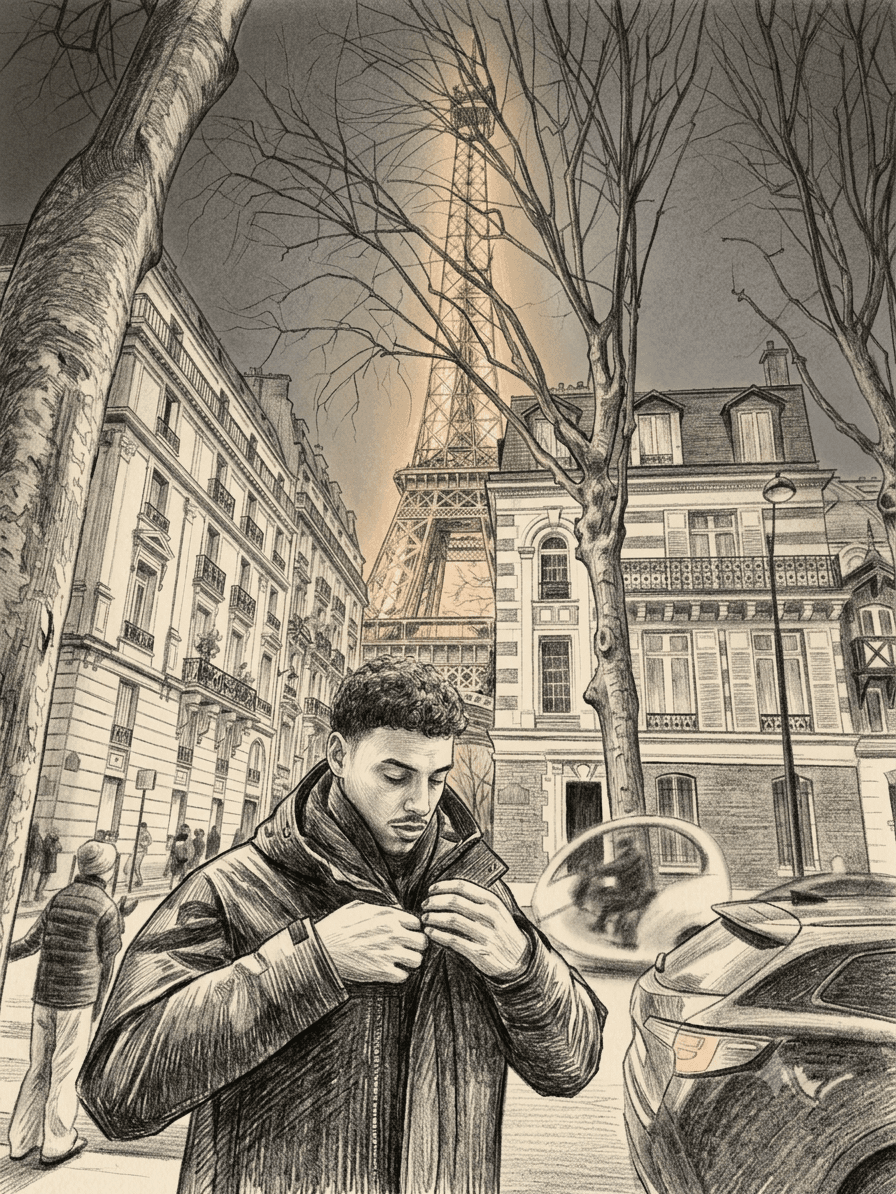
I left anyway. I'd been saying it since I was a child, and at some point saying a thing becomes embarrassing. So: a one-way ticket to Paris, everything else behind me.
Paris was fast. Not unpleasantly — beautifully, even. But it moved in a permanent forward lean, and I never found my rhythm in it. I am a slow person. I like knowing I have time. I like the version of the meal where nobody checks their phone, the version of the conversation that doesn't have somewhere to be. Paris didn't seem to want any of that.
I stayed long enough to understand it. Long enough to like it. Not long enough to belong to it.
The work turned out to be in Lyon. I didn't know it would matter where. Then it did.
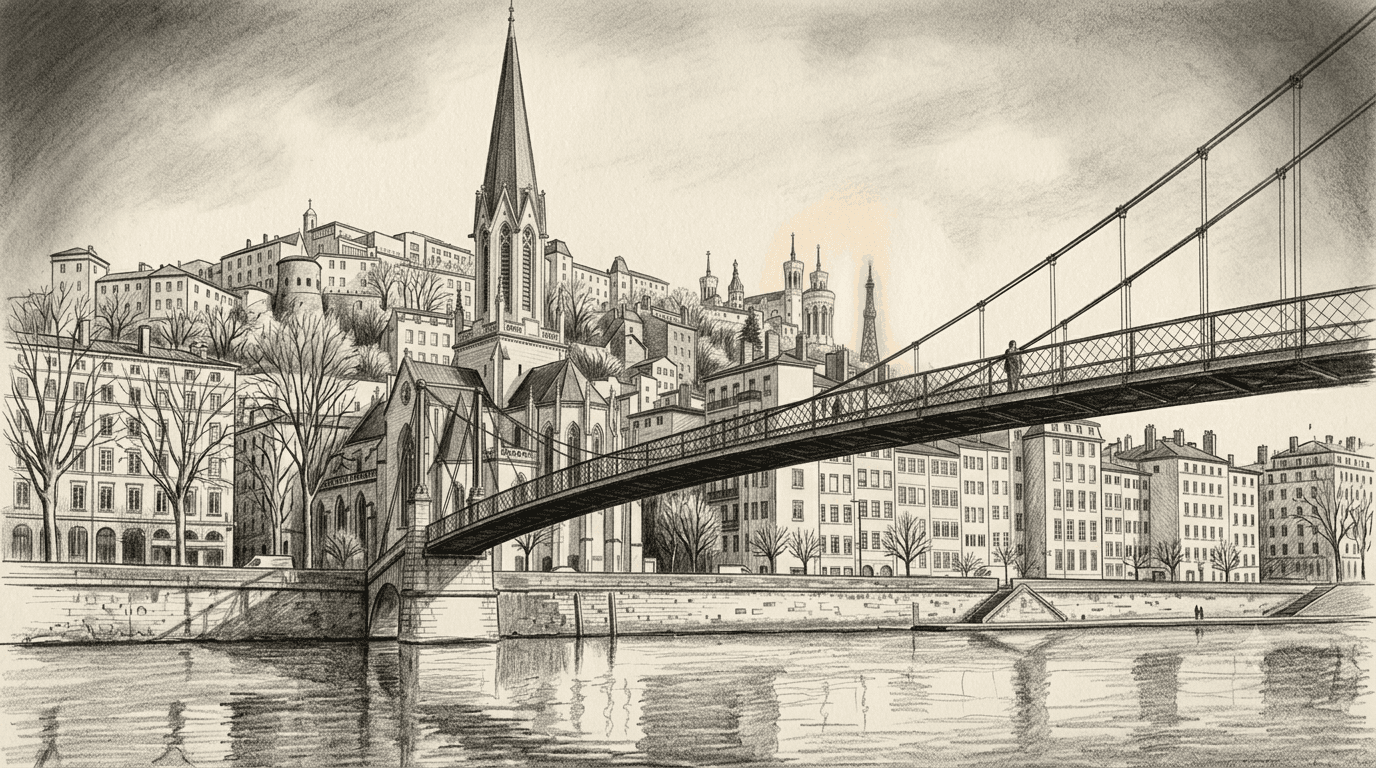
Both cities carry a lion on the crest — Oran and Lyon — and I've stopped trying to explain it. What I found instead was the same light on the water, the old city on a hill at the same angle, the same version of an evening: people eating late not from forgetting but because that's when the day ends. A market where the vendor still argues with you. Streets that reward walking. A city that knows what it is without having to say it.
I arrived knowing nobody. I was home inside a week.
Piano
Chopin, mostly, and I came to him by an unserious route: an anime, Your Lie in April. I'm not going to apologise for that. The nocturnes first, then the waltzes, then Ballade No. 1 in G minor. Nine minutes that hold back, and hold back, and then don't. It's the piece that puts me at peace, which is a strange thing to say about it if you've heard the ending.
I started learning piano recently and I'm not good at it. I don't have the hours. The plan is to play the Ballade one day, and I've made peace with that day being far off.
Rubato: the left hand keeps strict time, the right hand is allowed to lie about it. I write the same way.
Karate
Gōjū-ryū, from the age of ten. Hard and soft — that's what the name says, and it took me years to understand those were never two things.
We went because our friends went, and we stayed because of what happened once we were there. The training wasn't always good. I had a sensei who forced the leg splits, which is not how flexibility works, and I still don't know where he got it. We went anyway. We competed. Even the hard sessions were fun, in a way that's difficult to explain to anyone who only ever saw the hard part.
You repeat the kata until the form disappears. The third rewrite is the first one that isn't performing.
Arabic poetry
From my father and my brother, before I was old enough to decide whether I liked it. Then all of it — jahili, umawi, abbasi, modern. I memorised more than I can still recite.
What held me wasn't only the language, though the fluency of those men is hard to describe to anyone who hasn't heard it. It was the culture underneath: generosity treated as a duty, courage assumed rather than announced, and a man permitted to be tender at home and terrible in the field without anyone experiencing that as a contradiction.
Antara ibn Shaddad is the one I return to.
وَلَقَد ذَكَرتُكِ والرِّماحُ نَواهِلٌ مِنّي وبِيضُ الهِندِ تَقطُرُ مِن دَميI remembered you while the spears were drinking from me, and the white blades of India dripped with my blood.
He is being killed and he is thinking of her. The tighter it gets, the softer the thought that arrives to carry you through.
The borrowed book
It started at university — a few children, mathematics and Arabic. Someone asked, I said yes. From there it grew: Scratch for the under-sixteens, then code — HTML, CSS, JavaScript — with Association El-kheldounia.
I'm not sure teaching is the word. Nobody taught me — a friend put a book in my hands and got out of the way. That's mostly what I try to do: set the thing down in front of someone and let them find out they can.
The best student I've had was my neighbour in Lyon. Eight years old. Chinese at home, French at school, English somewhere in between, and he came to me for Arabic. He kept up. I didn't always.
Someone lent me a book. Everything since has been finding someone to hand it to.
Now
August 2026. Working through the nocturnes. Reading more than I'm writing.
It's a fermata. It means hold the note longer than it's written.